

The Accused in The Indiana Courts Schedule a Free Consultation
How Can Field Sobriety Test Results Be Disputed in Court?
Failing a field sobriety test on the side of the road can feel like the case against you is already decided. However, that isn't true. These tests are built on assumptions about your balance, coordination, and attention that don't hold up equally well for every person or in every setting.
A stumble on a roadside test can be caused by nerves, uneven pavement, poor lighting, fatigue, or a medical condition just as easily as it can from alcohol. The courts recognize that these tests are far from an exact science. At the Law Office of S. Neal Ziliak, I look closely at how these tests were administered because that's often where a DUI case starts to fall apart.
If you have failed a field sobriety test, contact my firm to schedule a free consultation. With over 25 years of experience defending clients across Noblesville, Hamilton County, Carmel, and Fishers, Indiana, I can help you explore how these results can be challenged.
What Do Field Sobriety Tests Measure?
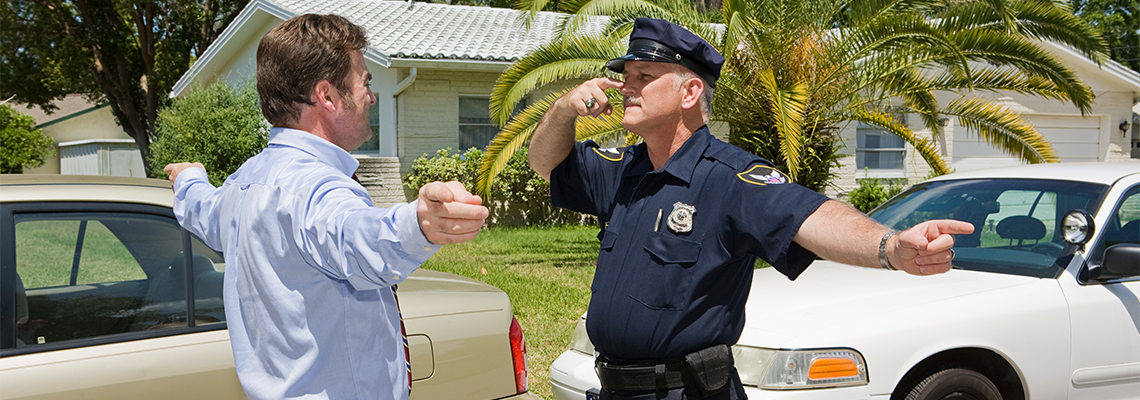
Field sobriety tests are a set of physical and cognitive exercises officers use during a traffic stop to gauge whether a driver may be impaired. In Indiana, the three tests recognized by the National Highway Traffic Safety Administration (NHTSA) are the horizontal gaze nystagmus test, the walk-and-turn test, and the one-leg stand test.
Each one is designed to reveal specific signs, such as involuntary eye movement, difficulty maintaining balance, or trouble following instructions, that officers are trained to associate with intoxication.
The results aren't a pass/fail test measuring your blood alcohol content. They're an officer's subjective interpretation of how you performed, which means the outcome depends heavily on the officer's training, attentiveness, and judgment that night. That subjectivity is one of the main reasons these results can be challenged in court.
Were the Tests Administered Correctly?
Standardized field sobriety tests come with specific instructions for how they're supposed to be given, down to the number of steps counted, the angle of a pen during the eye test, and the exact verbal cues an officer provides beforehand.
If an officer skips a step, gives unclear instructions, or performs the test on an uneven surface, such as a sloped shoulder, gravel, or a slanted sidewalk, the results can be unreliable regardless of how the driver actually performed.
Body camera and dashcam footage can often show whether the officer followed proper procedure or deviated from it. If the administration itself was flawed, you and your attorney may be able to argue that the results shouldn't carry the same weight the prosecution wants them to.
Could Physical or Medical Factors Explain Your Performance?
Field sobriety tests assume every driver has the same baseline coordination, balance, and physical ability. However, this isn't realistic. The factors that can affect your performance without any connection to alcohol include the following:
Inner ear conditions that affect balance and equilibrium.
Prior leg or back injuries that make standing or walking tests difficult.
Arthritis or other joint issues that limit mobility and steadiness.
Neurological conditions that can affect coordination or eye movement.
Certain medications that cause dizziness or slowed reactions.
Your age and weight, which can make tests like the one-leg stand harder regardless of sobriety.
Nervousness during the stop, since anxiety alone can lead to shaky hands, unsteady footing, or trouble concentrating on instructions.
When a medical condition or another factor may account for your performance, that information can be raised to challenge the assumption that poor field sobriety test results indicate intoxication.
Can Environmental Conditions Affect the Results?
Where and when a test takes place matters. Roadside tests are often conducted at night, near passing traffic, with headlights or flashing patrol lights creating glare, on shoulders that slope or contain loose gravel. Wind, cold temperatures, rain, and footwear like high heels or work boots can all affect your balance and coordination, regardless of whether you consumed alcohol.
Indiana courts can take these conditions into account when weighing the significance of the test results. When reviewing a stop, my firm will typically examine the footage, weather records, and the specific location to determine whether the setting itself made accurate testing unlikely.
What Role Does the Officer's Training and Documentation Play?
Officers are required to complete specific training on how to administer and score field sobriety tests, and that training is expected to consistently follow NHTSA guidelines. Gaps in an officer's training records, inconsistent scoring notes, or reports that don't match video records can all raise questions about the reliability of the officer's conclusions.
Therefore, it's important to closely review the arrest report, the officer's certification history, and any recorded footage, since discrepancies between what was written down and what actually happened can significantly affect how a judge or jury views the evidence.
If you're unsure whether these details were handled properly during your stop, my firm can help you make sense of what happened. Reach out to me today if you need guidance from an experienced Indiana DUI defense attorney.
How Do Field Sobriety Test Results Fit Into Your Larger Case?
Field sobriety test results are usually just one piece of the evidence prosecutors rely on when pursuing DUI charges. It's worth noting that Indiana's implied consent law, outlined in IC 9-30-6, applies to chemical tests such as breath or blood tests, not field sobriety tests.
Refusing a field sobriety test carries different consequences than refusing a certified chemical test. Because field sobriety results are open to interpretation, they often work alongside other evidence, such as driving pattern, odor of alcohol, or chemical test results, rather than standing alone.
That also means disputing field sobriety evidence can significantly affect the overall strength of the state's case, even when other evidence exists. Each factor gets weighed together, and weakening one piece can change how the whole picture looks.
Contact My Firm to Discuss Your Field Sobriety Test Results Today
A failed field sobriety test can leave you uncertain about what the footage actually shows or how much weight those results really carry. Because these tests depend on proper administration, fair conditions, and an officer's training and documentation, any weakness in those areas can create a real challenge in court.
As a criminal defense attorney in Noblesville, Indiana, with over 25 years of experience, I can help you closely examine how your field sobriety test was conducted and what that means for your case. Contact me, Attorney S. Neal Ziliak, to schedule a free consultation and discuss the specific circumstances of your stop.